
Baroque Bracelet Orders: Set Appearance Limits
For an irregular baroque pearl bracelet order, agree a representative appearance range before buying. Separate pearl shape, purple tone and lustre from spacer layout, clasp arrangement and receiving damage. Label accepted and review-needed examples so the supplier and buyer use the same reference when assessing the supplied assortment.
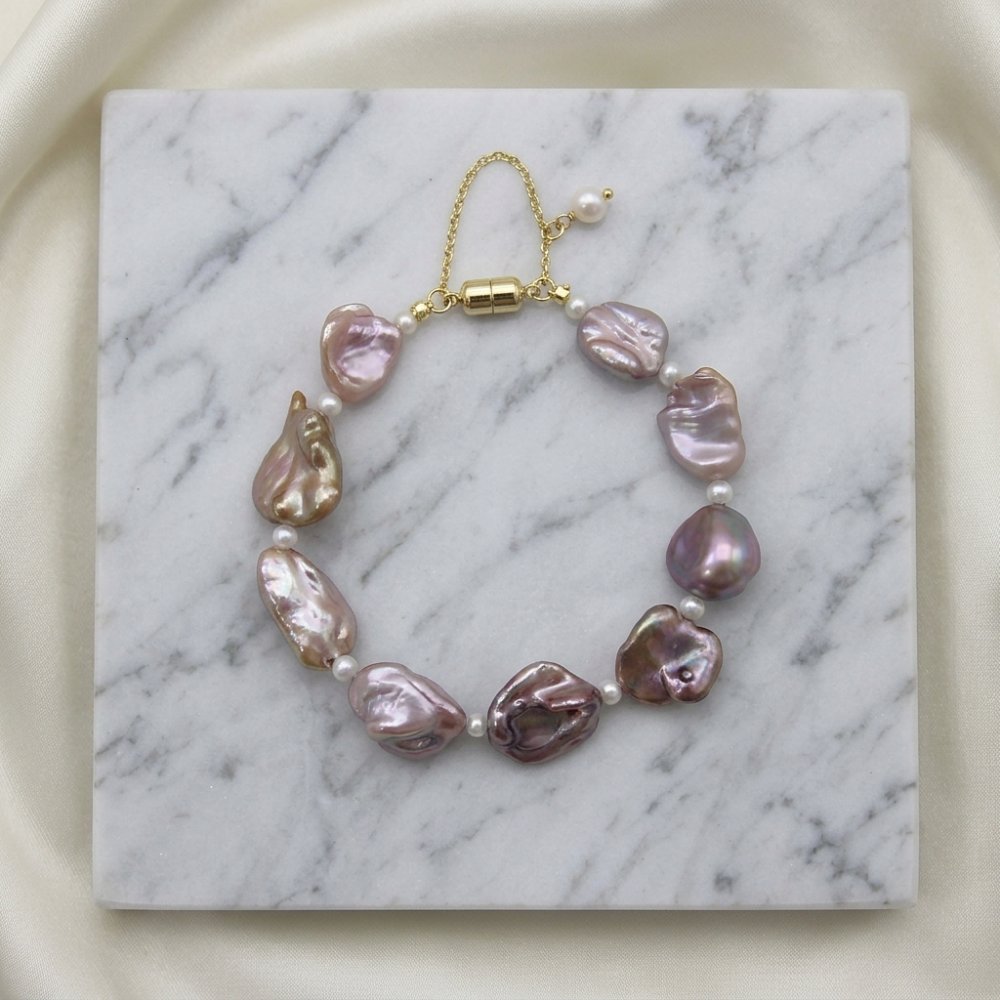
Official product-page flat presentation used to discuss the bracelet’s visible appearance and arrangement. It is one catalogue example rather than a verified limit for every supplied bracelet.
Start with the actual bracelet description
Rushi lists an Irregular Purple Baroque Pearl Magnetic Clasp Bracelet. The supplier describes purple-tone freshwater baroque pearls separated by small rice pearls, with a magnetic clasp. Its material field identifies a gold-plated recycled brass base and the two pearl types. Treat these as supplier declarations to identify the offered product.
The page also explains that pearl shape and lustre can vary. That statement matters when buying wholesale bracelets for a coordinated retail range. A buyer should agree how much visible variation is acceptable in the supplied assortment, rather than expecting every bracelet to reproduce one photograph. The practical deliverable is a shared appearance reference for the particular order.
Separate natural variation from assembly questions
Ask the supplier to show representative examples across the proposed lot. A single selected bracelet is useful for identifying the style, but it does not describe the full range of contours, surface appearance or purple tones the buyer may receive. Request examples that illustrate the proposed acceptable range, including its boundaries.
Discuss pearl appearance separately from the assembled bracelet. Large pearl shapes, smaller spacer placement and the visible clasp arrangement are different review points. The supplier’s explanation of natural differences should not replace an agreement about missing components, an incorrect arrangement or damage found on receipt. Define those situations directly with the supplier instead of inventing a universal pearl defect rule.
Mark which appearance features may vary within the agreed assortment.
Identify examples that need buyer review before shipment.
Keep assembly and damage questions separate from pearl variation.
Official worn catalogue reference showing large pearl contours and smaller spacers. Confirm the proposed order range with representative samples.
Use a small appearance approval matrix
A useful matrix describes what the buyer will actually compare. Avoid an unexplained grade letter or an instruction such as “same quality.” Ask the supplier to respond to each field with representative photographs, an agreed description or a specific open question. Any numerical limits must come from a separate agreement.
Review field
Approval question
Large pearl contours
Which shape differences may appear within this order?
Purple-tone range
Which reference examples define the proposed colour range?
Surface and lustre
Which visible features are acceptable or require review?
Small pearl spacing
What layout will identify the approved bracelet assembly?
Clasp and visible metal
Which appearance and component arrangement will be supplied?
Record the supplier’s proposed range first, then add the buyer’s acceptance decision. If a reference is rejected, explain the feature involved and request an alternative. A specific response about an example is more useful than asking the supplier to make irregular pearls identical.
Make the comparison photographs useful
Request an overall view and closer views of the areas under discussion. Ask for the representative bracelets to be photographed using a consistent background, lighting arrangement and viewing angle. Include an identifier with each example so an approval comment cannot become detached from the bracelet being discussed.
The official gallery includes a flat presentation and worn views. Those compositions help communicate the intended style. For an order decision, ask the supplier to provide comparable views of the proposed samples instead of comparing a close-up under one light with a distant lifestyle photograph under another. Retain the original files alongside the selected references.
If the order will be sold as a coordinated display, explain whether buyers expect a broadly similar tone across the display or deliberately varied individual pieces. Ask the supplier whether the proposed assortment can meet that request and to identify any selection work involved. Do not treat a catalogue picture as confirmation that such sorting is already included.
Official lifestyle reference from the same product gallery. Viewing angle and lighting differ from the flat presentation, so it is not a uniform comparison standard or a size measurement.
Carry the agreed boundaries into receiving
Before purchase approval, ask both parties to identify the accepted reference set and unresolved exceptions. Attach that set to the order description with the actual product name. Where an example represents a boundary rather than a preferred centre, label it clearly. This helps receiving staff understand why two visibly different bracelets might both fall within the agreed range.
At receipt, compare the relevant items with those references and photograph any questioned area before deciding its disposition. Note whether the issue concerns pearl variation, assembly, visible metal or transit condition. Ask the supplier to review exceptions against the same agreed basis; avoid changing the acceptance standard after seeing the shipment.
These appearance steps do not independently establish pearl origin, treatment, metal composition, recycled content or clasp performance. Obtain any required supporting information separately. An appearance approval should state its scope clearly, while keeping the supplier’s material declarations associated with the actual offer.
Frequently asked questions
Must every bracelet match one photograph?
The supplier explicitly describes shape and lustre differences. Agree a representative range for the order instead of assuming a single catalogue bracelet establishes identical appearance.
Does the variation note settle every receiving issue?
No. Ask the supplier to distinguish accepted pearl features from assembly, component and damage questions in the order agreement.
What should a buyer send first?
Send the bracelet link, intended assortment appearance and the review matrix. Use Rushi’s contact page to request representative samples, and consult its blog for related sourcing topics.
Baroque Pearl BraceletsAppearance ApprovalWholesale Buying