
Pearl Earring RFQs: Agree the Pair Match
For pearl drop earring RFQs, approve the two earrings together. Ask the supplier to define the intended relationship between their pearl appearance, assembled drop lengths and facing direction. Keep a photograph of the identified pair with that agreement. A pair can be coordinated without being identical, and the purchasing specification should say which differences are acceptable within that particular pair.
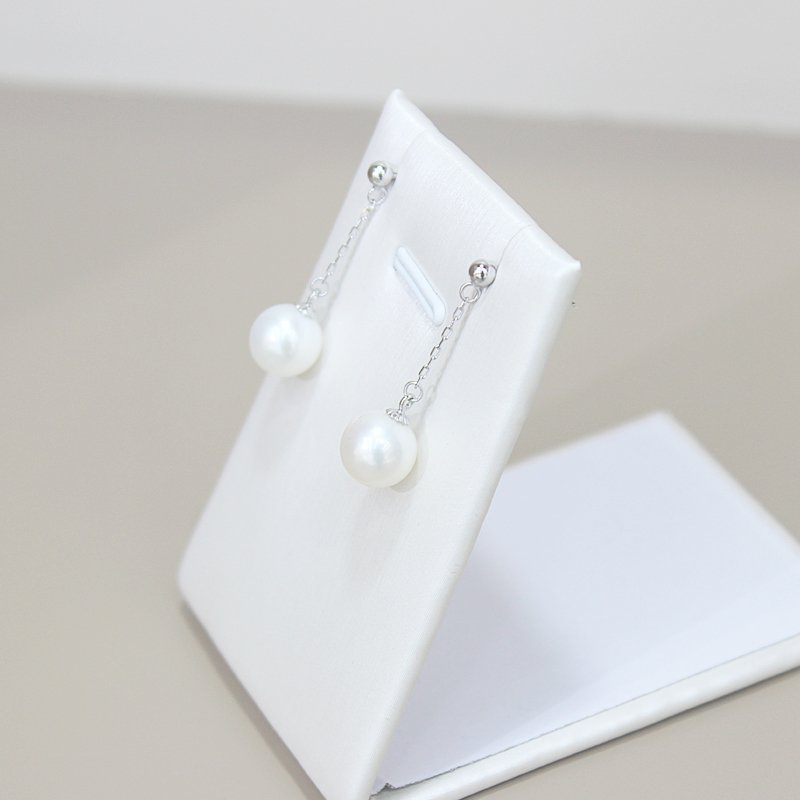
Official product-page pair on an angled stand. Both earrings are visible, but perspective and placement do not establish their measured drop lengths or a matching tolerance.
Use the listed earrings as the starting reference
Rushi Jewelry’s Long Drop Earrings with Freshwater Pearls page identifies the item as earrings and declares 925 sterling silver and natural freshwater pearls. Its description refers to slim silver chains. The gallery shows a pearl suspended below each small upper fitting, with separate stand and worn presentations.
The supplier also states that pearl shape and lustre have inherent variations. That gives a buyer sourcing wholesale earrings a specific question: how will the two selected pieces relate to each other? The answer should concern the supplied pair, rather than the overall appearance range of a tray or shipment.
Define coordinated appearance before requesting selection
Tell the supplier whether the intended design calls for a similar-looking pair, a mirrored arrangement or a deliberately different presentation. Ask it to confirm the offered design intent first. Do not require symmetry simply because two earrings will be sold together, or assume that the catalogue promises an identical pearl on each side.
For a coordinated pair, discuss the relationship between the two pearls’ apparent size, contour, tone and lustre. Ask for examples that illustrate an acceptable pairing and one that needs review. Describe the difference being discussed in each example. An unexplained instruction such as “same quality” leaves the relationship between the two pieces unresolved.
Keep this decision distinct from a general shipment range. Two earrings could each fall within an accepted overall range yet still make an unsuitable pair for the buyer’s intended presentation. Ask the supplier to show the proposed two-piece combination, not just two individually acceptable examples. Where several candidate combinations are shown, give each pair a separate reference so approval of one combination does not silently approve exchanging pieces between them.
Pairing field
Question for the supplier
Design intent
Similar, mirrored or deliberately different?
Pearl appearance
Which differences are acceptable within one pair?
Assembled drop
Which endpoints and relationship will be agreed?
Facing direction
Which front and orientation identify each piece?
Pair identity
How will the accepted two pieces stay associated?
Official side worn reference showing one earring. It illustrates the displayed arrangement, not the relationship between both supplied pieces or a numeric length specification.
Compare both drops using the same endpoints
Ask the supplier to propose measurement endpoints for the assembled drop and show them on a labelled reference. The same start and finish points should apply to both earrings. Keep a chain-only measurement separate if one is supplied, since the upper fitting, connectors and pearl can also affect the complete hanging outline.
State whether the purchasing requirement concerns a common nominal drop, an agreed difference between the two pieces or another intentional arrangement. Obtain the actual figures and any acceptance limit from the supplier agreement. A tilted display stand can make one pearl appear lower without establishing that its assembled earring is longer.
Give front, back and orientation clear references
Request front and side views with the two earrings presented together under comparable conditions. Ask the supplier to identify any intended facing surface and explain whether either piece has a designated position. Use temporary identifiers such as A and B in the enquiry, leaving the supplier to confirm whether left and right designations actually apply.
Retain a full-pair photograph alongside any close view. A close-up can locate a contour or connection, while the overall view preserves the relationship between the two pieces. Use the same orientation when reviewing a revised pair so an apparent difference is not created by turning one piece around.
Another official worn composition, with a hand beside one drop and the other partly visible. Pose and viewing angle are styling references, not a controlled pair comparison.
Keep the accepted pair associated through receiving
Attach the accepted pair reference to the quotation revision and ask how the supplier will keep the two selected pieces associated through packing. This is a request to confirm its handling arrangement, not a statement that individual pair sorting or particular packaging is already included.
When receiving goods, compare both pieces together against the accepted reference. Record any questioned difference with the pair identifier and photographs of both earrings. If a replacement is proposed for one piece, ask for its appearance and assembled-drop relationship to the retained piece to be reviewed before treating the pairing as restored.
Identify the exact offered pair and reference revision.
Keep pearl appearance, assembled drop and orientation as separate review points.
Refer an unresolved difference to the supplier before accepting a changed pairing.
The catalogue’s natural-variation notice does not define buyer acceptance limits. Its material wording is a supplier declaration; these photographs do not independently verify pearl origin, metal composition, durability or safety. No sample has been measured here. Agree the pair-specific requirements through the supplier contact page before using them as receiving criteria.
Pair matching FAQ
Must both pearls be identical? The supplier explicitly describes natural variations. Confirm the intended relationship and acceptable differences for one pair instead of assuming identical appearance.
Can the model images establish equal lengths? Their poses and perspectives differ. Request agreed measurement endpoints and supplier figures for both assembled earrings.
What should accompany a pairing decision? Keep the identified pair photograph, appearance decision, drop specification and orientation reference together with the relevant quotation revision.
Pearl EarringsPair MatchingB2B Purchasing