Plated Necklace RFQs: Specify the Finish Scope
For a plated pearl-necklace RFQ, ask the supplier to map its metal and finish declarations to the actual components being offered. Rushi’s flat baroque pearl necklace lists “18K gold-plated” with a brass base, but the catalogue does not give a component-by-component finish schedule. Request the covered parts and surfaces, the applicable finish description, and an identified sample reference. Keep appearance approval separate from any supporting composition or performance evidence.
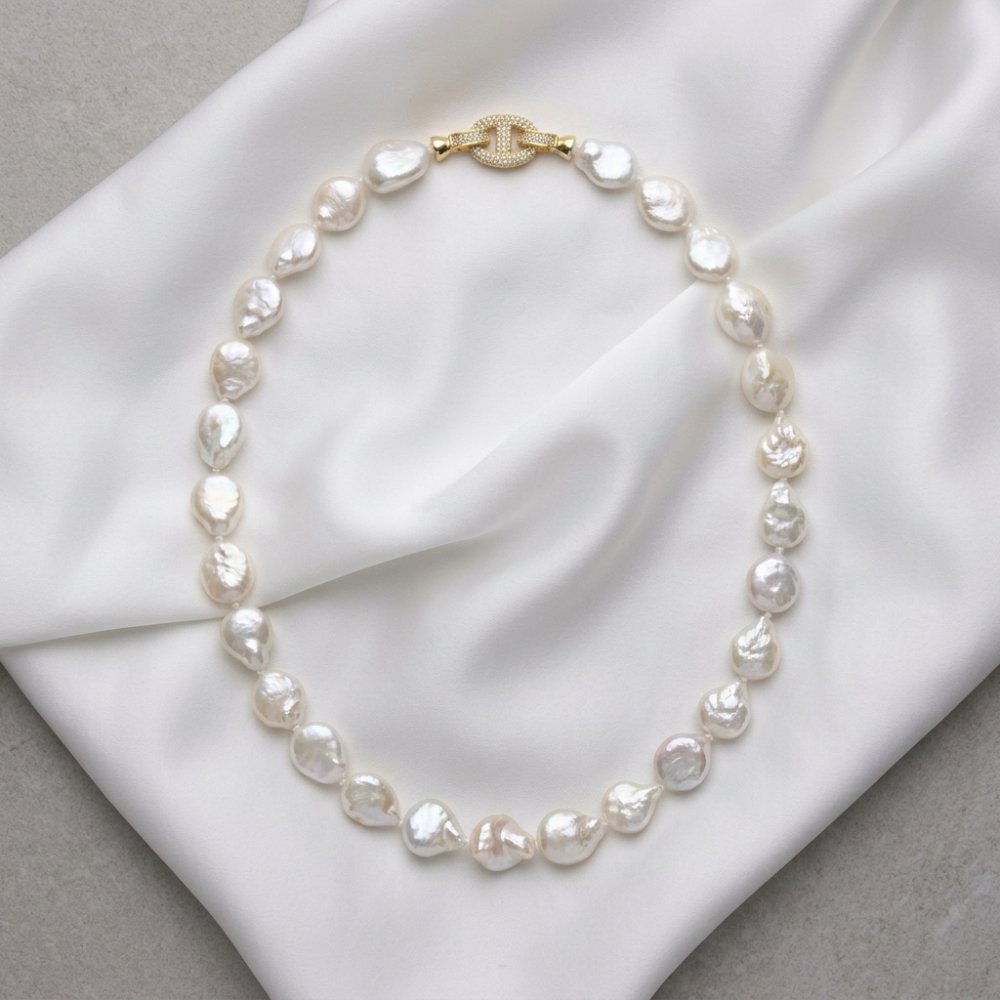
Actual flat baroque pearl necklace catalogue view. The visible closure identifies an area for the supplier’s component map; gold colour does not establish its complete material or plating specification.
Keep the catalogue declaration with the selected item
The Gold-Plated Necklace with Flat Freshwater Baroque Pearls listing describes an 18K gold-plated finish with a brass base. That is a useful starting point for a wholesale necklaces enquiry, but a buyer still needs to know which metal components the statement covers.
Attach the actual product reference and ask the supplier to identify the quoted version. Keep the pearl description separate from the metal-part specification. The immediate purchasing deliverable is a clear finish schedule for the assembly being offered, rather than a broader material claim built from its overall appearance.
Ask for a component map before comparing finishes
Request a marked reference that identifies the metal parts present in the proposed necklace. The supplier should name the actual components rather than adopting a generic parts list from another design. If the assembly includes separate closure, connecting or extension parts, ask for their applicable declarations to be stated explicitly.
Specification field
Supplier response requested
Reference to retain
Component identity
Named metal parts in the offered assembly
Marked image or component schedule
Base material
Material declaration for each applicable part
Product-specific supplier response
Finish description
Plating or other treatment stated for that part
Finish schedule and version
Covered surfaces
The areas included in the proposed treatment
Supplier’s scope explanation
Where one statement applies to several components, ask the supplier to say so directly. Where a component differs, keep that difference visible instead of shortening the entire assembly to one unqualified metal-and-finish phrase.
Official worn reference from the same listing. It helps locate the metal detail within the assembly, without establishing fit, plating thickness or wear performance.
Clarify the surfaces included in the offer
A front catalogue view may not show every side of a metal component. Ask the supplier to identify the treatment scope for the relevant front, rear, inner or recessed areas. Use its marked reference to locate those areas rather than assuming that the visible face explains the complete specification.
If the buyer has a particular appearance requirement for an area, state that request separately and ask what the supplier proposes. Keep a requested change distinct from the catalogue offer until the supplier has responded. This makes the comparison understandable without treating every proposed finish variation as an available service.
Keep the base-material and finish fields separate
Retain the supplier’s brass-base declaration beside the part it covers, and keep the plating wording in its own field. If the supplier uses a more detailed material designation, request an explanation of its applicable scope. Do not infer a missing component specification from the colour of a neighbouring part.
The same separation helps when an alternative is proposed. Ask whether the change affects the underlying component, its finish, or both. A revised appearance reference alone may leave the material question unanswered, while a material response alone may not identify the appearance the buyer is being asked to approve.
Another official worn catalogue reference for the listed necklace. Use an identified supplier sample and finish declaration for approval; the photograph is not composition or durability evidence.
Request quantitative details only with their basis
If the purchase requires information such as a plating thickness, request the value, unit, component or surface scope, and the supplier’s stated supporting basis. Keep that request attached to the offered version. The reviewed page does not provide those details, so the buyer should not fill them with a typical value from another necklace.
Any supporting document should identify what it covers. Ask the supplier to connect the document to the relevant part or sample reference. Composition information and a performance evaluation answer different questions; a finish declaration should not silently become an assurance about durability or every condition of use.
Approve appearance against an identified reference
Request the supplier’s proposed finish sample or other agreed appearance reference. Record the version and the conditions used to compare it with the submitted necklace. If alternatives are presented, keep each one identifiable and return comments against the correct reference.
Identify the necklace and its applicable component map.
Keep base materials and finish descriptions in separate fields.
Connect the covered surfaces to the supplier’s scope explanation.
Retain the appearance decision beside any separate supporting evidence.
Appearance approval records what the buyer accepted visually. It does not replace a material declaration or prove a result outside that review. Keep the scope of each decision clear so purchasing and merchandising teams can use the same product description.
Carry the finish schedule into the quotation
Ask the final quotation to identify the accepted component and finish references. If the supplier proposes a different metal part or treatment later, request a clearly identified revised response before carrying the previous approval forward. Retain unresolved items rather than allowing them to disappear into a shortened product title.
Send the selected necklace and finish questions through the supplier contact page. The pearl jewellery articles provide broader sourcing context, while the product-specific schedule defines the material and finish scope for this enquiry.
Frequently asked questions
Does the catalogue identify the finish on every metal part?
It gives a general metal-and-plating line. Request a component map and applicable finish declaration for the actual version being quoted.
Can a photograph establish the plating thickness?
No thickness result is supplied by the image. Ask for the value and supporting basis if that information is part of the purchasing requirement.
What should be checked when an alternative is offered?
Identify whether the component, base material, finish or covered surfaces change, then request the corresponding revised specification and appearance reference.
Pearl necklace sourcingPlating scopeComponent specifications