Flat Pearl Necklaces: Specify Packing Contact
What should a B2B packing enquiry for a flat pearl necklace specify? Identify the offered assembled necklace, ask the supplier to show its proposed individual packing layout, and mark where pearls, decorative metal details and packing surfaces can contact one another. Approve the actual sample and opening observations within a stated scope. A catalogue photograph or material description alone does not establish that a packing method prevents damage.
Official catalogue reference for the assembled necklace. It identifies the areas a packing proposal must accommodate, without establishing a packing method or protective result.
Identify the complete offered necklace
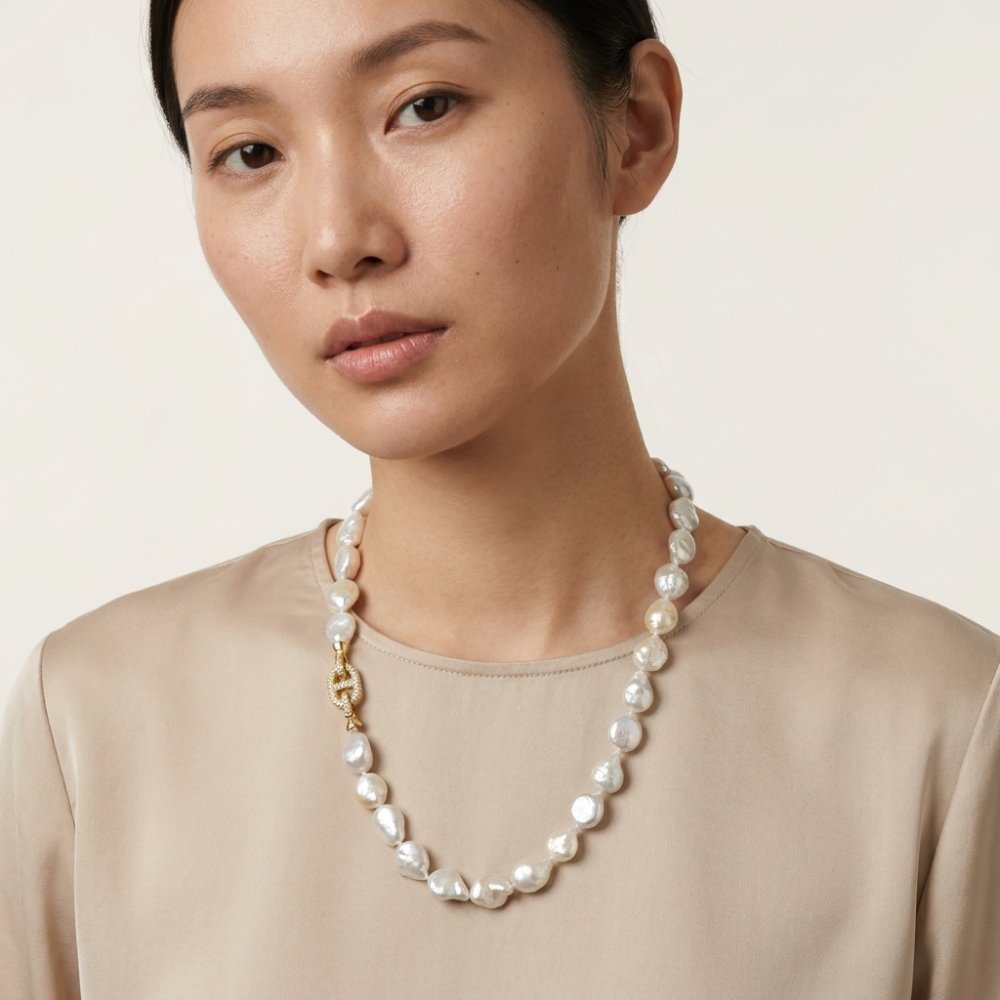
Rushi lists a Gold-Plated Necklace with Flat Freshwater Baroque Pearls. The catalogue describes flat freshwater pearls and gold-plated metal on a brass base. Official images show a multi-pearl assembly with a decorative gold-coloured closure region. These details identify the offered product for a packing discussion; material descriptions remain supplier declarations.
For wholesale pearl necklace orders, link the packing request to the same version as the quotation and sample. Ask the supplier to distinguish the necklace from display fabric, clothing or other styling items. A photographed presentation does not define the delivered package or confirm which accessories are included.
The reviewed page provides no confirmed packing-contact map or packing-validation result. Start with the supplier’s available proposal, then decide which areas need a closer sample review. Do not invent a packing material or promise a protective outcome on the basis of the catalogue appearance.
Buying field
Requested supplier response
Product identity
Exact offered necklace and identified assembled sample.
Individual layout
Necklace position, strand route and intended removal sequence.
Contact map
Where pearls, metal details and packing surfaces may touch.
Proposed materials
Supplier identification of direct-contact inserts, wrappers and supports.
Opening record
Sample starting condition, opening observations and identified areas reviewed.
Approval scope
Accepted pack version, sample evidence and expressly agreed order references.
Request a product-to-pack contact map
A box name or an empty-insert image does not show how the assembled necklace will sit. Request a view of the actual necklace in the proposed pack. Ask the supplier to identify the strand orientation, placement of the decorative metal region and points where one component can rest against another.
Keep the questions descriptive. Is a pearl touching a metal detail? Does an insert sit against a pearl face, a strand connection or the closure area? Are parts separated, supported or left free to move? The supplier should explain its proposal rather than leaving the buyer to assign an unconfirmed function from a photograph.
The supplier notes natural variation in pearl shape and lustre. Ask how its proposed layout accommodates the offered necklace and the range being quoted. Agree which differences would require another sample check. Neither a photograph nor this guide establishes a universal clearance or allowable variation.
Official complete-necklace reference. The display fabric is not a confirmed packing material; ask the supplier to identify the proposed product-to-pack contact areas.
Identify the direct-contact packing materials
Request the supplier’s description of the materials that directly touch the necklace. Wrappers, insert covers, ties and pads can have different roles, and their contact points may be hidden in a top view. Ask which component locates the necklace, which separates parts and which forms the outside presentation.
A soft-looking surface is not evidence of compatibility. Identify the proposed material and decide what supporting information or sample observations are appropriate for the order. No chemical compatibility, abrasion resistance or long-term storage result is established by the catalogue photos.
If the buyer supplies branded packing or requests a substitution, identify what changes in the contact arrangement. A revised wrapper, insert or fastening position needs confirmation even when the outer box looks unchanged. Link the response to the actual packing version.
Record a defined packed-sample opening
Agree what the sample review should answer. For an initial layout decision, useful evidence may include the necklace position before opening, the proposed removal sequence and the appearance of the parts that contact packing surfaces. Identify the sample and record its starting condition.
Follow the agreed opening instructions and describe unexpected movement or handling difficulty. If there is a visible mark, residue or displaced component, identify the area and observation before assigning a cause. This guide does not claim that such a problem exists in the listed necklace.
A transport, storage or repeated-handling requirement needs an expressly agreed review scope. Ask the supplier to propose suitable evidence and discuss any method and decision criteria with the relevant parties. A single opening photograph is not a transit qualification or a guarantee of undamaged delivery.
Another official appearance reference. Approve an identified packing sample; this worn scene does not establish finish durability, fit or supplied accessories.
Approve packing within its own scope
A finish declaration answers a different question from how a plated component contacts the pack. Approval of pearl appearance likewise does not approve every wrapper or insert. Keep those decisions separate while pointing each record to the same offered product.
Retain the sample identifier, layout images, packing-material references and opening observations with the written decision. State what was accepted and what remains unconfirmed. Ask the supplier to identify proposed material or layout changes before treating them as equivalent.
Give receiving staff enough information to recognise the accepted individual-pack arrangement and raise differences. The record can explain the product and pack references, the reviewed layout and the agreed check. It does not create an inspection standard, defect allowance or storage-life promise that the parties have not agreed.
Buyer FAQ
Does the catalogue fabric define the delivered packing?
No. It is a presentation surface. Request the actual individual-pack proposal and confirmation of what the quotation includes.
Does a metal finish declaration approve an insert?
No. Component finish and product-to-pack contact have different scopes. Request relevant information and a defined sample review for the proposed combination.
Must every pearl have a separate compartment?
No universal layout is prescribed. Ask the supplier to propose an arrangement for the offered necklace and agree the sample-review scope.
Does an opening check prove transport protection?
It records the defined sample and opening observations. Transport or storage requirements need their own agreed scope and evidence.
What should purchasing approve?
Identify the necklace version, packing layout, direct-contact materials, sample evidence and decision scope, with proposed changes confirmed separately.
Use the actual flat baroque pearl necklace as the reference. Ask Rushi for an identified packing proposal and retain the response with the quotation. See the jewellery blog for related purchasing topics.
Identify the offered necklace and proposed individual-pack layout.
Map contact areas and identify supplier-proposed packing materials.
Approve defined sample evidence and confirm changes separately.
wholesale necklacesB2B supplier sample record