
Pearl Necklace Quotes: Define the Weighed Item
For a pearl necklace weight quotation, define exactly what is placed on the scale. Ask whether the stated figure covers the complete supplied necklace, a pendant alone or another component group, and whether packaging is included. Keep the object definition, unit, supplier sample reference and meaning of an approximate value together before comparing offers.
Two necklace offers can show similar-looking products and different weight figures without describing the same weighed object. One supplier may be referring to an unpackaged complete item, while another may include a display card or quote a component separately. A short weight-basis record helps a wholesale buyer identify that difference without treating a photograph or a catalogue figure as a measured receiving result.
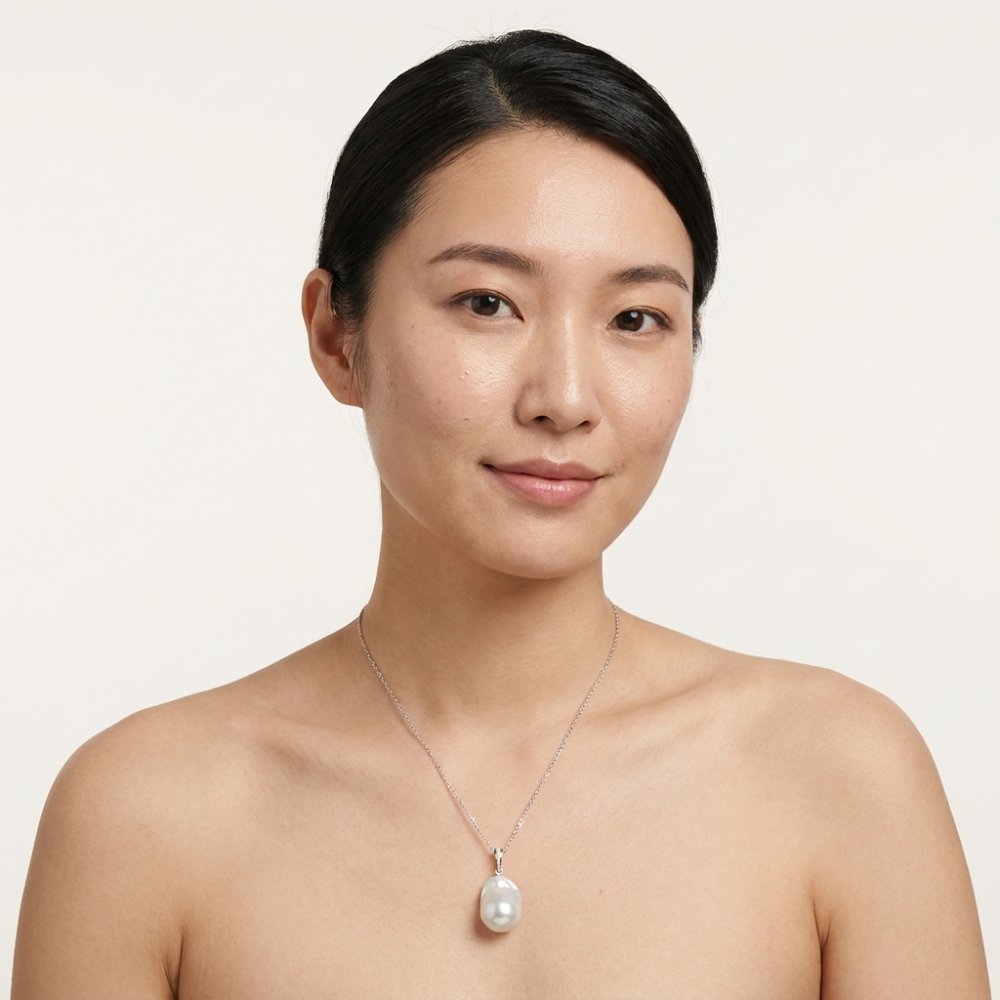
Official necklace worn reference. Use the identified supplier product to define the weighed item; this photograph is not a scale reading or a statement of precious-metal content.
Start with the exact catalogue statement
Rushi lists a Universal Clasp Necklace with Single Large Baroque Pearl and Adjustable Length, and gives its catalogue weight as about 7g. Treat that as the supplier statement to clarify for the offered version. It is not a weighing result produced by the buyer. The same listing describes a detachable universal clasp, which makes the boundary of the supplied and weighed item a useful purchasing question.
Identify the quotation line, supplier model reference and sample version in the inquiry. Quote the catalogue wording accurately, including the approximate nature of the figure, then ask the supplier to define the object behind it. Keep the clarification linked to this product instead of transferring a weight figure from another necklace in the catalogue.
Map the included jewellery components
Ask the supplier to identify whether the chain, pearl pendant, clasp and any separately supplied connector are included in the stated figure. A labelled picture or component list is useful when different combinations can be offered. The purpose is to identify the counted assembly, rather than to specify a mounting method from an image or assume that a detachable part is always sold separately.
If the supplier provides a separate component weight, keep it as a separate line with its own object description. Do not compare a pendant-only figure with a complete necklace figure as though both describe the same purchase unit. Where the buyer requires a particular supplied combination, make that combination explicit on the quotation and the sample reference used for the weight discussion.
Buying field
Requested supplier response
Product reference
Exact offered necklace model, quotation line and identified sample version.
Jewellery boundary
Supplier confirmation of the chain, pendant, clasp and other included supplied parts.
Packing boundary
Unpackaged jewellery or an explicitly described card, pouch, box or other included pack.
Weight statement
Declared value, unit and whether it is approximate, a target or a sample observation.
Sample record
Supplier sample identity, weighed configuration and reported measurement basis.
Comparison decision
Buyer comments and the supplier-confirmed basis retained with the offer.
Official catalogue reference for the offered necklace. Ask whether the quoted weight includes the chain, pendant and supplied clasp configuration.
Separate jewellery weight from packing weight
Describe any presentation material that could be included with the supplied item. Ask whether the declared figure refers to jewellery alone or includes a display card, pouch, box or another packing component. These are alternative scope questions, not a statement that the catalogue offer includes any particular package. Keep a packaging proposal separate until the supplier confirms what it contains.
Terms such as net weight and gross weight are most useful when their object boundary is written beside them. A per-item packed weight and the gross weight of a shipping carton describe different objects. If both are needed, request separate records. For a sample comparison, ask the supplier to identify what was removed from or included with the item rather than trying to infer a packing allowance from a single figure.
Keep sample observations and approximate values distinct
When the supplier reports a sample weight, retain the sample identity, included component configuration and unit. Ask how the reported figure was obtained and how the supplier intends it to relate to the quotation. The buyer can request the applicable measurement information without inventing an instrument precision, a conditioning procedure or a numeric tolerance.
An approximate catalogue figure does not by itself define an acceptance range. If item weight is a purchasing requirement, ask the supplier to state the proposed basis and discuss how a sample or delivery difference will be assessed. Record the agreed response as a separate decision. This prevents a descriptive catalogue value from becoming an unintended exact acceptance rule.
Related official gallery detail. Component identity and the sample record should accompany a weight comparison rather than being inferred from the photograph.
Compare like configurations and retain the reply
Before comparing a revised offer, confirm that the necklace configuration remains the same. A change to the offered chain, pendant or supplied clasp arrangement can change the object being described. Give the revised offer a distinguishable reference and ask the supplier whether the earlier weight statement still applies. Keep product changes visible rather than adjusting the previous figure without an explanation.
A complete necklace weight also does not establish the mass of its precious-metal portion. A pearl and other included components contribute to the total object. If a separate component declaration is required, ask for it explicitly and keep its evidence separate from the total weight record. The catalogue image and the overall gram figure are not a substitute for that declaration.
At receiving, identify the item or sample that raised the question and record the configuration that was actually compared. Send the observation to the supplier against the agreed object definition. Retain the response with the quotation or order line. That gives purchasing and receiving staff a consistent reference without claiming that every visual or numerical difference has already been accepted or rejected.
Buyer FAQ
How should a buyer interpret the about 7g catalogue figure?
Treat it as the supplier-declared approximate figure for clarification. Ask which supplied jewellery components and pack state it covers; it is not an independently measured result.
Can a pendant-only weight be compared with a complete necklace weight?
Keep them as separate object definitions. Confirm the supplied chain, pendant and clasp combination before comparing per-item figures.
Does the full necklace weight show its silver content?
The complete item can include the pearl and other components. Request any required component declaration separately rather than deriving it from the total figure.
What should accompany a supplier sample weight?
Retain the sample identity, included configuration, unit, reported measurement basis and how the supplier intends the observation to relate to the quotation.
Use the official adjustable pearl necklace reference, review the jewellery catalogue and request a clearly scoped weight statement.
Identify the complete supplied component configuration.
Separate jewellery-only, packed-item and shipping-carton weight objects.
Keep approximate declarations and sample observations under clear references.
wholesale necklacesB2B supplier sample record